Outdoor Materials Showdown
Quick Answer
Wood vs. Composite. Stamped Concrete vs. Stone Pavers. Making the right architectural choice.
When building a massive outdoor living space, the materials you select dictate not just the initial installation price, but the agonizing weekend maintenance you commit yourself to for the next 20 years. Here are the core structural comparisons.
1. Elevated Decks: Wood vs. Composite
If your back door is 3 feet or higher off the ground, you must build an elevated structure. The debate is always between the cheap, natural beauty of real wood versus the expensive, zero-maintenance engineering of modern plastics.
Pressure-Treated Pine (The Old Standard)
- Pros: It is incredibly cheap to buy. A massive deck will cost heavily in labor, but the lumber itself is highly affordable. It has that classic, natural "smell" and feel underfoot.
- The Brutal Reality: Wood is a sponge. In the Midwest, it absorbs humidity all summer, freezes and cracks all winter, and gets baked by the sun in August. To prevent it from graying, splintering, and rotting, you MUST spend an entire weekend every two years scrubbing it with harsh chemicals and re-staining it.
Composite / PVC (Trex, TimberTech)
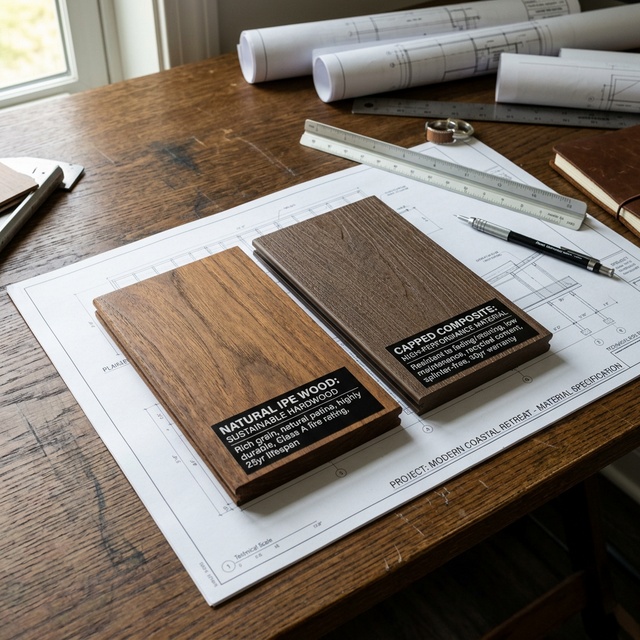
- Pros: Zero maintenance. You literally just wash it down with a hose in the spring. It never splinters (safe for bare feet), never rots, and modern engineering makes it look astonishingly like expensive tropical hardwoods (ipe or mahogany). They are installed with "hidden fasteners" so you never see a single screw head on the deck surface.
- Cons: The upfront cost is massive (often double or triple the price of pine). PVC decking also gets significantly hotter in direct sunlight than real wood, which can burn bare feet in July.
2. Ground Patios: Stamped Concrete vs. Pavers
If your yard is relatively flat, hardscaping is almost always superior to building a wood deck 6 inches off the grass (where moisture will become trapped and rot the joists).
Stamped Concrete (The Monolith)
The Pros: The contractor pours one massive, solid slab of concrete and stamps a beautiful pattern into it before it cures. Weeds cannot grow through it because there are no actual joints. It is significantly cheaper than laying thousands of individual hand-cut stones.
The Cons: As the old saying goes: "There are two types of concrete: concrete that has cracked, and concrete that is going to crack." When a monolithic slab inevitably cracks due to Midwest freeze/thaw cycles, repairing a custom-stamped, color-dyed slab invisibly is physically impossible. You must seal the color every two years or it fades to dull gray.
Interlocking Pavers (The Modular Puzzle)
The Pros: This is a massive, flexible system. Because the patio is made of thousands of individual stones resting on a highly compacted bed of sand and gravel, the entire patio can "flex" slightly as the freezing ground heaves in January. It will almost never crack. If a single stone does chip, you pull it out and drop a new one in.
The Cons: Astronomical labor costs to install. If the contractor is lazy and does not install polymeric sand between the joints, weeds and ants will inevitably infiltrate the patio.