Wood vs. Fiberglass Doors: Why Iowa Ruins Wood
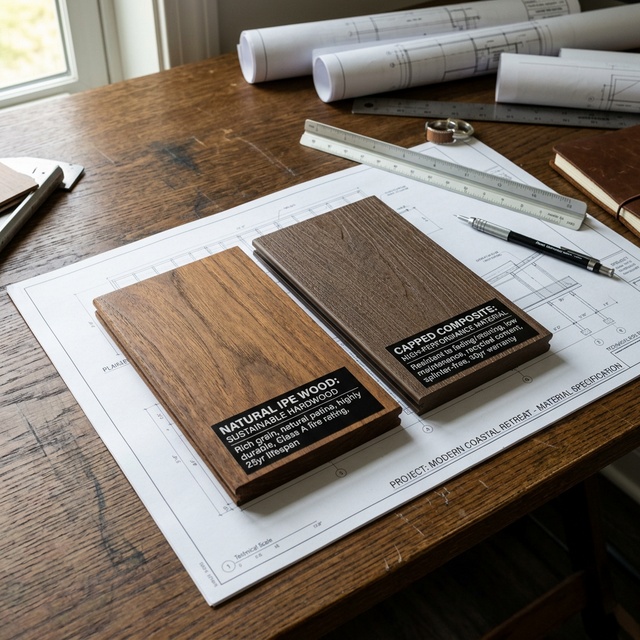
A solid mahogany or oak front door is undeniably beautiful. For centuries, wood has been the gold standard for high-end residential architecture. But there is a massive reality check that elite exterior contractors must deliver to Des Moines homeowners: Iowa weather actively destroys organic wood.
The extreme swing from a bone-dry, sub-zero January to a 95°F July day with 90% humidity forces organic material to undergo violent expansion and contraction. Here is the modern reality of choosing between classic wood and high-performance fiberglass.
The Tragedy of the Wooden Door in the Midwest
Solid wood is a porous, living material that naturally acts like a sponge. In the humid Iowa summer, the wood absorbs moisture from the air. The massive slab swells and expands outward.
Because the frame the door sits inside doesn't change size, this swelling causes the door to violently rub against the jamb. You have to put your shoulder into the door just to force it closed, and turning the deadbolt becomes a fight.
Then, winter arrives. The humidity drops to zero. The wood dramatically shrinks and contracts. It pulls away from the weatherstripping, breaking the airtight seal. Suddenly, freezing drafts are shooting directly around the edges of your $5,000 mahogany door. Furthermore, this endless cycle of swelling and shrinking fundamentally breaks the heavy varnish coating. Once the varnish cracks, water fully infiltrates the wood fibers, and permanent rot begins.
The Fiberglass Solution
Fiberglass was engineered to solve exactly the failures of wood and steel.
1. Zero Expansion Liability
Fiberglass contains zero organic cellular structure. It is utterly immune to humidity. A fiberglass door maintains the exact same micro-millimeter dimensions at 100°F with 90% humidity as it does at -15°F. It will never stick. It will never warp. And because it maintains its structural shape permanently, the weatherstripping seal remains flawless year-round.
2. The Insulation Core
Solid wood actually transfer heat surprisingly well (which is bad in winter). Premium fiberglass doors (like ProVia) do not rely on the surface material for insulation; they are hollow shells injected entirely with dense polyurethane foam. This makes a fiberglass door upwards of five times more energy efficient than a solid wood door of the exact same thickness.
The Aesthetic "Telltale" Test
Homeowners hesitate to commit to fiberglass because they want the "luxury" look of real wood grain. Twenty years ago, fiberglass doors looked like cheap, flat plastic.
Today, elite manufacturing has completely changed the game. Premium fiberglass panels are cast using specialized molds taken directly from actual, high-end wood planks. They capture the deepest textures of oak, cherry, and mahogany. When a factory professional hand-stains a modern fiberglass door using precision techniques, it is completely indistinguishable from real wood unless you literally tap it with a coin.
| Performance Metric | Solid Wood Doors | Premium Fiberglass Doors |
|---|---|---|
| Warping & Swelling Risk | High (Guaranteed in Iowa humidity) | Zero (Dimensionally stable) |
| Maintenance Demands | Extreme (Sanding/Varnishing every 2-3 years) | Ultra-Low (Occasional soap and water) |
| Insulation Value | Poor (Solid cellular structure transfers heat) | Elite (Polyurethane foam core) |
The Final Verdict
Unless your Des Moines home is on the National Register of Historic Places and the municipal architectural review board legally mandates you must maintain the original 1910 solid mahogany door, choosing wood in Iowa is a massive liability.
A premium fiberglass door delivers the exact aesthetic beauty of wood, provides vastly superior energy savings due to its foam core, and completely eliminates the nightmare of sticking, rot, and bi-annual varnishing.
Quick Answer
Which door option actually delivers the best ROI for your Iowa home?